Public Safety Network Testing in the Real World


What Technicians Need to Know
When first responders enter a building, reliable radio communication is not optional. Firefighters, police officers, and emergency medical personnel must be able to communicate throughout the facility—including in stairwells, basements, mechanical rooms, parking structures, and other areas where signals may struggle to penetrate.
That is why public safety network testing should be viewed as more than a final compliance step. It is an ongoing process that begins with understanding the building, continues through system installation and acceptance, and extends into annual inspections and future renovations.
During a recent roundtable discussion , public safety specialists from Windy City Wire and iBwave explored what this process actually looks like in the field—and what technicians need to consider at every stage.
“Testing is needed because how else are you going to know if it works or not?”
— Jason Papineau, iBwave
Start With the AHJ Not the Test
Public safety communication requirements are guided by standards such as the NFPA and IFC codes, but the specific testing methodology is ultimately determined by the local Authority Having Jurisdiction (AHJ).
Requirements can vary considerably between jurisdictions. One AHJ may accept automated measurements collected by a scanner, while another may also require voice testing using a public safety radio. Grid dimensions, signal thresholds, critical-area requirements, and the point during construction when testing must occur may also differ.
Before arriving onsite, technicians should confirm:
Which codes and local requirements apply
The required grid configuration
Which frequencies and channels must be measured
The applicable signal strength, signal quality, and pass/fail thresholds
Which critical areas require additional testing
Whether automated measurements, manual radio testing, or both are expected
The required report format and supporting documentation
Agreeing on the methodology early helps prevent a common and expensive problem: completing the survey only to discover that the AHJ expected a different procedure.
Test the Building as It Will Actually Be Used
A building is not a static RF environment. Concrete, low-emissivity glass, drywall, metal doors, equipment, storage racks, and even furniture can affect how signals move through it.
Timing therefore matters. Testing a facility when construction is only 70 or 80 percent complete may produce very different results from testing it after tenants, equipment, and inventory are in place. This is particularly important in warehouses and manufacturing facilities, where floor-to-ceiling metal racks, machinery, and moving equipment can significantly change radio performance.

Whenever possible, the initial acceptance test should represent the building under normal operating conditions. If this is not possible, technicians should carefully document the building’s condition during the survey so that future results can be properly understood and compared.
Think Beyond the Initial Pass or Fail
The initial grid test answers an important question: Does the building currently provide the coverage required by the AHJ?
If it does not, the results help determine whether a BDA or another in-building enhancement system is necessary—and whether the entire building or only specific areas require improvement. Once the system has been installed, testing is repeated to confirm that it performs as intended.
But the process should not end when the building passes its acceptance test.
Changes inside and outside the facility can affect performance over time. A building may be renovated, expanded, or reconfigured. New equipment may be installed. Warehouses may fill previously empty racks. The outdoor public safety radio network may also be modified or optimized, changing the signal reaching the building.
Annual inspections, where required and enforced by the AHJ, help identify this degradation before it becomes a problem during an emergency.
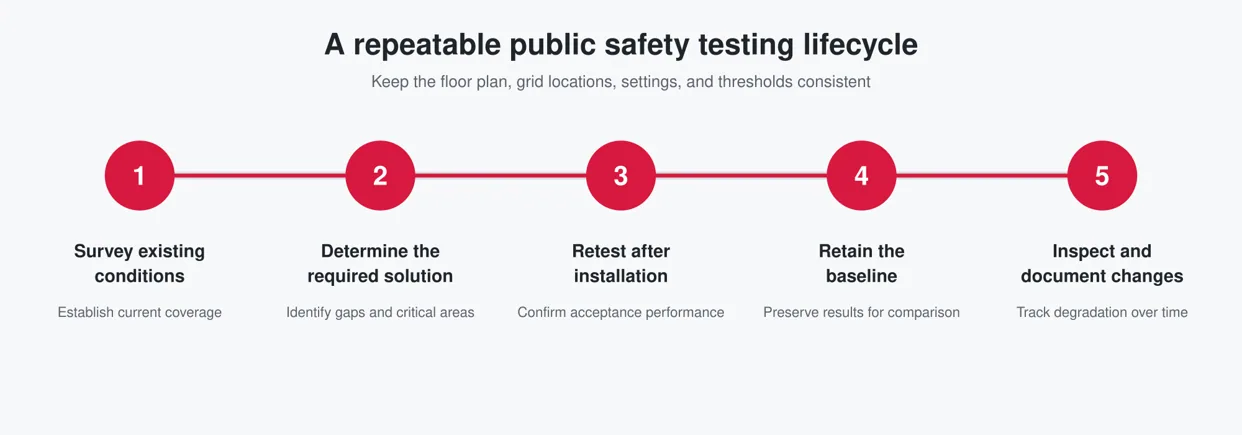
The most effective approach is therefore a repeatable testing lifecycle:
Conduct a pre-installation survey to establish existing conditions.
Use the results to determine whether enhancement is required.
Repeat the same grid after installation for acceptance testing.
Retain the results as a baseline for annual inspections.
Investigate and document any areas where performance has changed.
Consistency is critical. Using the same floor plans, grid locations, test settings, and thresholds makes it easier to compare results and identify meaningful changes.
What Technicians Need in the Field
A successful survey begins with good preparation. At a minimum, technicians need access to the facility, accurate floor plans, a defined testing methodology, and the appropriate measurement equipment.
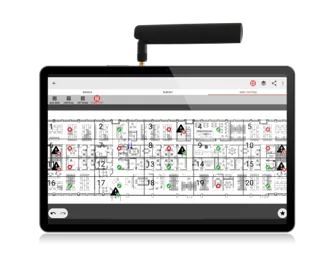
A scanner and tablet-based workflow can simplify the collection process. The technician loads the floor plan, establishes the required grid, identifies critical areas, and records measurements at each test point. Depending on the technology and AHJ requirements, these measurements may include RSSI, bit error rate, and P25 Delivered Audio Quality (DAQ).
Modern survey software can calculate pass/fail results automatically and generate a report before the technician leaves the site. This removes much of the manual work associated with writing down readings, capturing individual screenshots, organizing measurements, and transferring the information into a separate report.
If the AHJ requires a manual DAQ test, a radio may still be necessary. The important point is that the field workflow must remain flexible enough to accommodate local requirements rather than assuming that one procedure applies everywhere.
Capture More Than RF Measurements
A useful site survey should also give the design and installation teams a clear picture of the building.
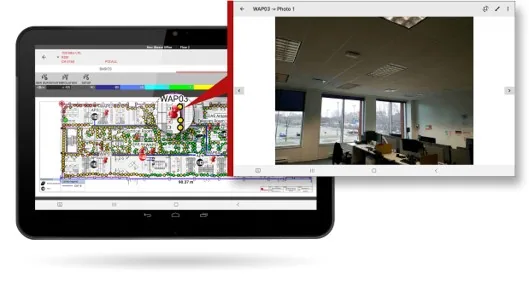
Technicians may need to document cable pathways, risers, equipment rooms, ceiling types, access restrictions, and other physical conditions that will affect the installation. Photos, videos, notes, and marked locations on the floor plan can provide valuable context to a designer who was not present during the survey.
Connecting this information directly to the design workflow reduces back-and-forth communication, eliminates guesswork, and lowers the risk of a return visit caused by missing information.
Making Public Safety Testing More Accessible
Public safety testing can appear intimidating to contractors entering the market, particularly those without a background in RF engineering. However, technicians do not need to become RF design experts before they can perform a structured grid test.
With the right training, clear workflows, and properly configured tools, fire alarm, life-safety, low-voltage, and BDA contractors can add survey and testing capabilities to their services. The solutions should guide the technician through the process, automate repetitive tasks, and make results easy to understand and report.
“Public safety is a little bit more life and death compared to cellular. It’s very important. You need to make sure that it is going to work.”
— Jason Papineau, iBwave
Ultimately, public safety testing is about more than satisfying a code requirement. It is about providing documented confidence that first responders will be able to communicate when entering a building—and continuing to verify that performance as the building and its surroundings change.
Watch the full Windy City Wire and iBwave roundtable to hear more practical guidance on public safety surveys, grid testing, AHJ requirements, training, and field workflows.
Ready streamline your public safety testing?
Contact Windy City Wire to learn more about the iBwave Mobile Survey solution with the Epiq PRiSM scanner, available with training and technical support.