The Gas Station Pull: Why "Intrinsically Safe" is Your First Line of Defense
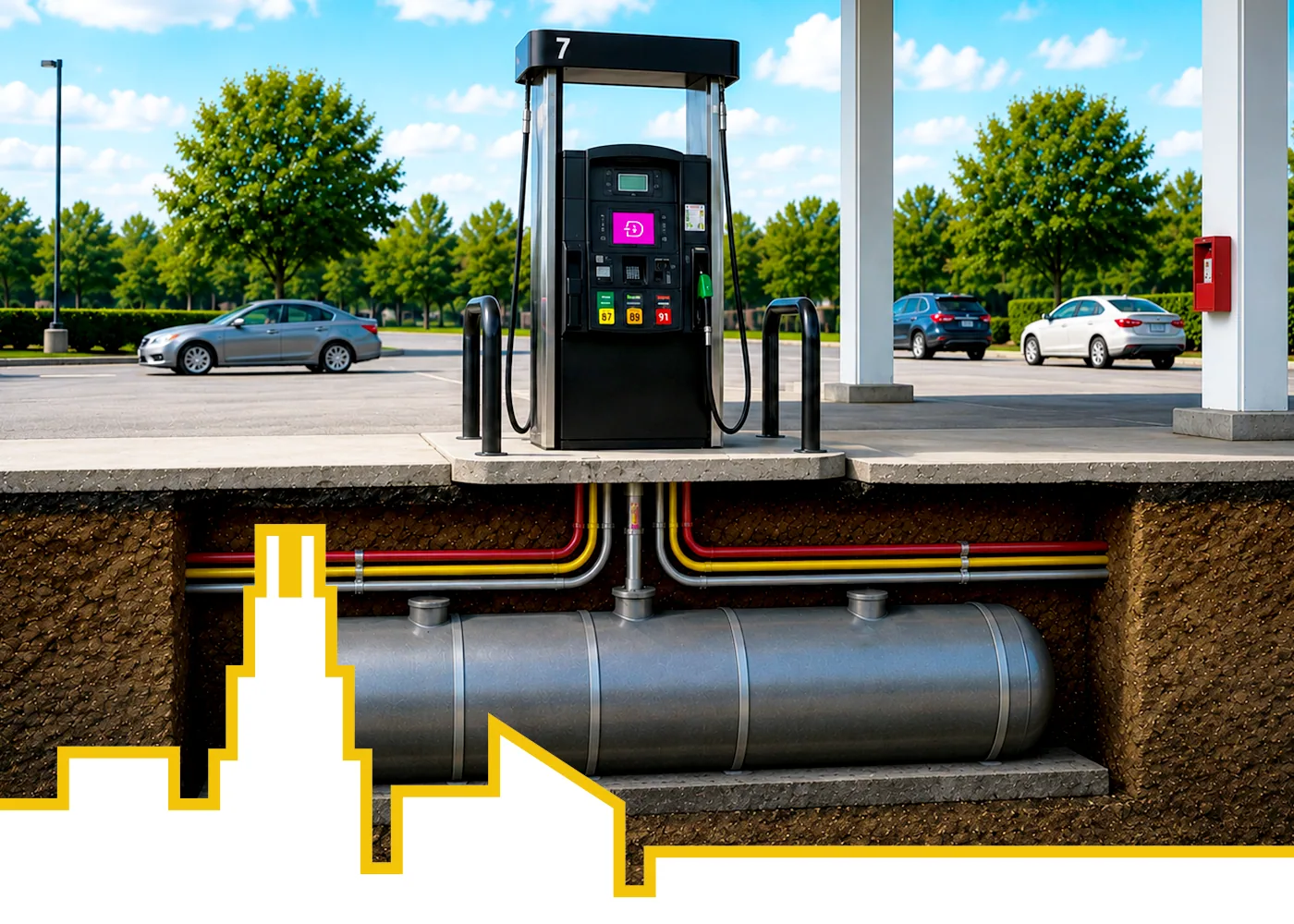
When you’re standing at a gas station, you’re essentially standing on top of a massive, pressurized chemistry set. Between the pumps, the underground storage tanks (USTs), and the vapor recovery systems, the environment is a constant mix of volatile liquids and combustible fumes.
For a low-voltage integrator, a gas station isn't just another outdoor job site—it is a high-stakes environment where the cable you choose determines the longevity and safety of the entire system. This is where the concept of Intrinsically Safe (IS) wiring moves from a technical manual into the real world.
Understanding the "Intrinsically Safe" Requirement
In the context of a gas station, an intrinsically safe circuit is one designed to operate with such low electrical energy that it is incapable of causing an ignition. Whether it’s for tank monitoring, leak detection, or point-of-sale (POS) data at the pump, these systems must remain cool and spark-free—even if a cable is nicked or a terminal is shorted.
Intrinsically safe cable is vital because it:
Resists Hydrocarbons: Standard PVC jackets will literally dissolve when exposed to gas fumes and runoff.
Prevents Arcing: It maintains electrical integrity to ensure no stray spark meets a fuel vapor.
Ensures System Accuracy: Low-energy sensors require high-quality shielding to prevent false leak alarms caused by electrical noise.
The Cost of the "Rookie" Cable Mistake
We often see contractors who are new to the fueling industry make a critical error: they assume a standard "outdoor-rated" or "direct-burial" cable is sufficient. While those cables might handle water, they are not designed to handle petroleum.
If you pull the wrong cable today, here is what happens six months from now:
Jacket Degradation: The gasoline in the soil migrates into the cable, causing the jacket to swell and eventually turn into a "goo."
The Ghost in the Machine: As the insulation fails, your sensors will start throwing intermittent error codes or false "leak detected" alarms.
The Re-Pull Nightmare: You’ll be forced to return to the site, break ground or open up sumps, and replace the entire run at your own expense.
The Lesson: It is exponentially cheaper to pull the right cable upfront than it is to mobilize a crew and a service truck for a total replacement six months down the line.
Pull It Once, Pull It Right with Windy City Wire
At Windy City Wire, we know that the labor is the most expensive part of any gas station install. That’s why our petroleum-resistant cables are engineered to survive the unique chemistry of a gas station environment.
Our specialized FEP/FEP (Fluorinated Ethylene Propylene) cables are the gold standard for these applications. With both an FEP insulation and an FEP jacket, these cables provide an impenetrable barrier against ethanol blends, lubricants, and harsh solvents. By combining this durability with our SmartWire technology, you get a cable that is as easy to pull as it is impossible to break.
Don't gamble with gas station safety. Choose an intrinsically safe, petroleum-rated cable for your next pump or tank project. Your future self (and your profit margin) will thank you.
Author
Justin DeBoer | Director of Petroleum & Gas, Windy City Wire
jdeboer@windycitywire.com
630.633.4523
Get Expert Guidance
Navigating the specifics of petroleum-rated wiring can be a challenge, especially with changing regulations and site requirements. We are here to help you get the spec right the first time.
Please contact our team for more information on our FEP/FEP Petroleum cables or if you have any questions regarding the best practices for these petroleum environments.

Windy City Wire
Windy City Wire
Windy City Wire