Distributed Antenna System for Indoor Cellular Coverage
Commercial buildings often create signal challenges that have less to do with the carrier and more to do with the structure itself. Concrete, steel, coated glass, stairwells, corridors, and dense floor plans can weaken cellular signal. That creates coverage gaps where users expect steady communication. A commercial DAS addresses this problem by distributing signal throughout a building through a planned antenna network. This article explains the DAS system meaning, how DAS technology works, and how it supports indoor signal coverage and cellular enhancement in commercial environments.
What Is a Distributed Antenna System?
A distributed antenna system is a network of spatially separated antennas connected to a common signal source. Its purpose is to distribute radio frequency signals throughout a building or structure where a single antenna or the external macro network cannot provide consistent coverage.
That definition answers the common question: What is DAS? DAS stands for Distributed Antenna System. The word "distributed" refers to antennas placed across different zones rather than concentrated at one point. "Antenna system" refers to the connected infrastructure that receives, processes, and rebroadcasts signals across the coverage area.
The DAS meaning is important because a DAS does not generate its own carrier signal. It receives a signal from a defined source and distributes it to antenna nodes throughout the building. The DAS acronym is sometimes grouped with consumer signal boosters, but a distributed antenna system is a commercial-grade signal infrastructure designed for larger, more complex environments. For a related overview, this guide to what a DAS distributed antenna system is offers additional background on building connectivity.
How a DAS Network Is Structured
A DAS network has two main parts: the signal source and the distribution system. The signal source supplies the radio frequency signal that the system carries. The distribution system moves that signal from the source to antennas placed throughout the building.
An off-air donor antenna may capture existing carrier signal from outside the building. An on-site base transceiver station, often called a BTS, may feed a signal directly from a carrier. A small cell may also serve as a signal input in some environments.
Once the source provides the signal, the DAS system distributes it through the network. The signal may travel through coaxial cable, fiber, low-voltage structured cabling, remote units, splitters, couplers, and antennas, depending on the system architecture. The goal is to move the DAS signal into areas where the macro network cannot reach with enough strength or consistency.
Passive DAS uses coaxial cable, splitters, and couplers to route the RF signal from the source to the antennas without active amplification at each antenna. This type may suit smaller or less complex structures.
Active DAS converts signal for transport through fiber or structured cabling to remote units, which then rebroadcast RF signal closer to the user. This type often appears in larger or more complex buildings.
Hybrid DAS combines passive and active elements. It can balance coverage goals, signal needs, and building layout across different zones.
Where DAS Technology Is Used in Commercial Environments
Distributed antenna systems appear in commercial environments where coverage gaps, building materials, or user density create communication challenges. These systems support many building types, each with different signal demands.
Healthcare facilities use commercial DAS infrastructure because hospitals and medical campuses depend on communication across patient areas, administrative spaces, service corridors, and emergency response zones. Signal interruptions can affect staff coordination and user access.
Office towers and corporate campuses often contain multiple floors, conference areas, enclosed rooms, equipment spaces, and dense user populations. Building structure and occupant load can create uneven signal behavior across different zones.
Higher education campuses bring another challenge. Large footprints, historic buildings, modern construction, and high-density gathering areas can make external cellular coverage inconsistent.
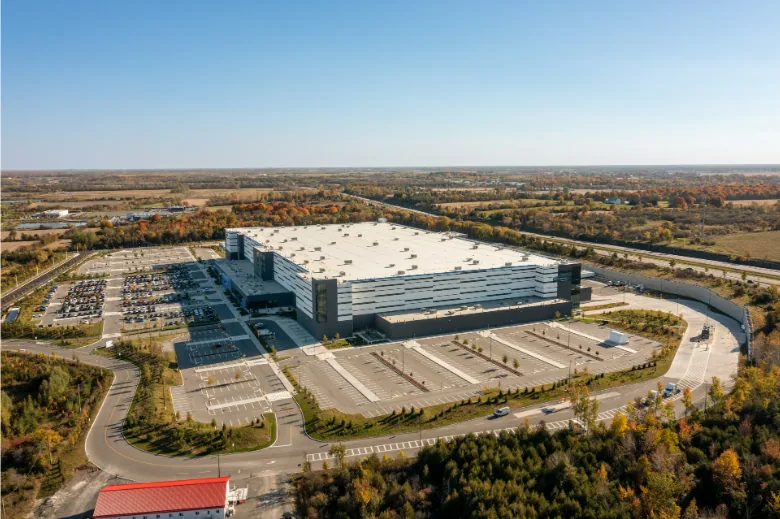
Warehouses and industrial facilities may include large floor plates, metal framing, racking, and structural materials that interfere with signal penetration. Stadiums and arenas introduce the issue of concentrated device demand from thousands of users simultaneously.
Transit hubs and parking structures create their own problems because below-grade or enclosed spaces can block external signal. In all of these settings, DAS technology supports a more controlled approach to signal distribution.
How DAS Supports Cellular Enhancement and Indoor Coverage
Cellular enhancement begins with a simple concept: reduce the distance between the user’s device and the signal source inside the building. A distributed antenna system places antenna nodes throughout the structure, which helps distribute the signal to areas that external networks do not consistently reach.
This reduces dead zones. Instead of relying on a single outside macro tower to push signal through concrete, steel, glass, and multiple interior barriers, a DAS brings the signal closer to the device. That can improve coverage across corridors, stairwells, mechanical areas, conference floors, parking levels, and other challenging spaces.
A DAS can also improve data performance. When users maintain closer proximity to an antenna node, devices can communicate more efficiently with the network. In high-density areas such as conference centers, common areas, and large commercial venues, a properly structured DAS can help distribute demand across the antenna network.
Emergency communication also matters. Public safety radio and first-responder communication depend on in-building signal reliability. A commercial DAS may support everyday cellular traffic, dedicated emergency radio paths, or BDA-integrated configurations where code requirements apply. Industry groups such as the Safer Buildings Coalition often frame in-building public safety communication around signal strength, signal quality, and system survivability. Those ideas show why DAS signal performance has become part of commercial building communication.
DAS Cabling and Signal Infrastructure
A DAS network depends on the cabling that connects signal sources, distribution equipment, remote units, and antenna nodes. The cable layer affects signal loss, interference resistance, and consistency across the full system. Coaxial cable commonly carries RF signals in passive systems. Fiber and low-voltage structured cabling often support active and hybrid architectures.
The right cable construction depends on the signal type, system architecture, distance, pathway conditions, and performance requirements. DAS cabling should be understood as part of the communication infrastructure, not as a separate afterthought. A well-matched cable path helps the DAS technology deliver signal where the building needs it.
Why Building Materials Create Signal Gaps
Modern commercial construction often prioritizes strength, energy performance, sound control, and space efficiency. Those priorities can affect wireless signal movement. Concrete walls, steel framing, elevator cores, low-emissivity glass, dense mechanical spaces, and below-grade areas can all weaken cellular signal. One side of a floor may have acceptable coverage, while a stairwell, interior room, or service area may show poor signal.
That unevenness explains why a DAS network focuses on distribution. The system does not rely on one strong signal point to cover every space. It spreads antenna locations across the building so that the signal reaches more areas with fewer structural obstructions. This approach matters because users move between many different environments during a normal day. A person may pass from a lobby to an elevator bank, then to a conference room, corridor, or parking level. Consistent communication depends on signal availability across that movement.
DAS, Public Safety, and Everyday Connectivity
Commercial buildings often need to support two related but different communication goals. The first is everyday cellular coverage for occupants, tenants, visitors, staff, and building operations. The second is public safety communication for emergency responders.
A commercial DAS can support cellular enhancement for everyday use, but public safety radio systems may involve different frequency bands, performance requirements, and authority review. That distinction matters because cellular signal and public safety signal do not always share the same design priorities. A building may need one system, the other, or separate systems that address different communication needs.
The best way to think about DAS is as a structured response to coverage limits. It is not simply an add-on for convenience. In many commercial environments, it supports communication continuity across daily operations and emergency conditions. The building shape, materials, occupancy, and use case all influence how important that communication layer becomes.
Understanding DAS System Meaning in Commercial Signal Planning
The DAS system meaning comes down to structured signal distribution. A distributed antenna system receives a signal from a source and distributes it through a network of antennas, enabling commercial environments to maintain stronger indoor coverage where external networks struggle to penetrate. That makes DAS relevant to cellular enhancement, public safety communication, and broader building connectivity planning.
DAS technology does not eliminate every signal variable, but it provides building teams with a dedicated infrastructure model to address coverage challenges. For more information on DAS cabling and signal infrastructure, the DAS Resource Center provides a useful starting point. For project-specific guidance on commercial signal coverage, the contact page provides a direct next step.
