The Belden 88760 Equivalent for Petroleum Cable: FEP-18-02-OAS Spec Match and Application Guide
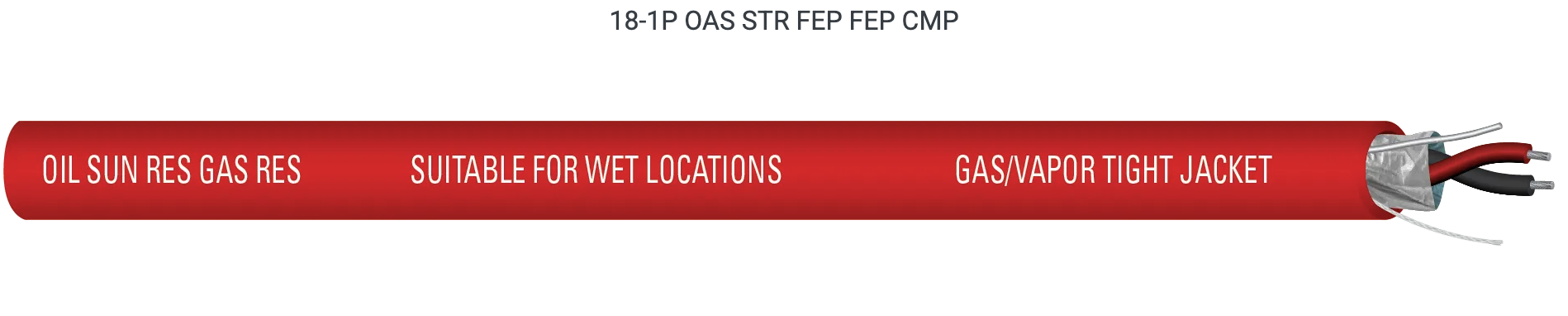
When petroleum contractors and fuel system integrators specify cable for gas pump and fuel dispenser wiring, they are working from a datasheet, not a catalog. The construction has to match. The materials have to be right for the environment. And in an industry where a station offline costs real money, availability matters just as much as specification.
The Belden 88760 equivalent has become the benchmark construction for petroleum cable applications. We manufacture a direct Belden 88760 equal, the FEP-18-02-OAS, at our Bolingbrook, IL facility. It is in stock, available in blue, white, and yellow jacket, and built to the same specification that fuel dispenser and CRIND system wiring demands. This post covers the full spec alignment, why each construction element matters in petroleum environments, and the application areas where FEP-18-02-OAS belongs on every project.
The Spec Match: FEP-18-02-OAS as a Belden 88760 Equal
When evaluating a Belden 88760 equal, procurement teams prioritize construction details. The FEP-18-02-OAS meets the standard across every relevant specification. The cable is built on 18 AWG, 2-conductor construction with 19/30 tinned copper stranding. FEP insulation covers each conductor. An aluminum/mylar foil shield provides 100% EMI coverage. The outer jacket is FEP, gas/vapor tight construction with a CMP plenum rating. Voltage rating is 300V. The temperature range extends from -80°C to +200°C. The cable is available in blue, white, and yellow outer jacket colors and is manufactured in the USA.
That combination of specifications is not incidental. Each element exists because petroleum environments require it, and the FEP-18-02-OAS delivers the complete construction in a single, stocked cable. For procurement teams working from a cross-reference or comparing against a project specification, the alignment is direct.
Specification
FEP-18-02-OAS
Conductor Size
18 AWG
Conductor Count
2-conductor
Stranding
19/30 tinned copper
Insulation
FEP (Fluorinated Ethylene Propylene)
Shield
Aluminum/mylar foil, 100% coverage
Jacket
FEP gas/vapor tight
Plenum Rating
CMP
Voltage Rating
300V
Temperature Range
-80°C to +200°C
Jacket Colors
Blue, White, Yellow
Origin
Made in USA (Bolingbrook, IL)
Why This Construction Is the Standard for Petroleum Environments
Cable ratings describe what a product can withstand. Construction details explain why. In petroleum environments, both matter, but understanding the reasoning behind each specification helps integrators and contractors verify that what they are putting in is genuinely suited for the job.
FEP insulation is the foundation of this construction. Standard PVC and XLPE degrade when exposed to petroleum vapor, fuel splash, and the chemical compounds present in and around fuel dispensers. FEP is chemically inert. It resists hydrocarbons and petroleum-based solvents while maintaining dielectric stability at temperatures that would compromise other insulation materials. That combination of chemical resistance and high heat tolerance sets the performance baseline for petroleum cable.
The FEP gas/vapor tight outer jacket addresses a specific requirement in underground storage tank and fuel dispenser environments. Vapor migration along the cable path is a real concern in these installations. An FEP cable jacket that seals against vapor transmission prevents fuel vapors from traveling through the cable run into areas where ignition risk or contamination would be a problem.
Tinned copper conductors resist oxidation in environments with constant moisture and chemical off-gassing exposure. Bare copper conductors degrade faster in these conditions. Over the service life of an installation, that difference in conductor material affects connection quality and conductivity stability.
The aluminum/mylar foil shield serves the EMI management needs of a modern fuel station environment. Gas stations run dense electronics: pump controllers, payment terminals, card readers, PIN pads, tank monitoring equipment, and lighting systems. Each generates electrical noise. The foil shield with 100% coverage protects signal integrity across every cable run where that interference would otherwise compromise payment processing or monitoring reliability.
The temperature range of -80°C to +200°C reflects the dual exposure profile of petroleum cable. Underground runs encounter cold soil conditions and seasonal temperature extremes. Above-ground runs inside dispenser cabinets see sustained elevated heat, particularly in warm climates or near pump electronics. One cable construction covering both ends of that range is not a specification luxury. It is a practical requirement for cable that will be asked to perform across different physical zones within a single project.
Where FEP-18-02-OAS Is Used in Petroleum Applications
The FEP-18-02-OAS is specified across the full range of petroleum infrastructure wiring. Each application environment places specific demands on the cable, and the construction of this cable addresses each of them directly.
Gas pump and fuel dispenser wiring is the primary use case. Internal wiring within dispenser cabinets is exposed to fuel vapor, heat cycling, and mechanical stress from the movement and vibration of the dispenser housing. CMP-rated, FEP-jacketed cable is the specified choice for this environment. The construction supports reliable performance under continuous exposure without degrading or releasing compounds that would affect the fuel system environment.
CRIND system wiring in gas pumps requires shielded cable. Card Reader in Dispenser units are EMI-sensitive by design. Payment processing electronics, PIN pads, and card readers operate in close proximity to pump motors, lighting systems, and monitoring equipment that generate electrical interference. The aluminum/mylar foil shield in FEP-18-02-OAS provides the coverage that CRIND signal paths require. In these environments, shielding is not optional. Unprotected signal cable in a CRIND installation introduces data error risk that a foil-shielded construction directly eliminates.
EMV infrastructure upgrades at fuel stations have driven significant rewiring demand nationwide. Europay, Mastercard, and Visa compliance requirements at fuel dispensers have pushed installers and integrators to retrofit dispenser cabinets for EMV-compliant card reader systems. That work requires running new shielded signal cable through existing cabinet assemblies. FEP-18-02-OAS supports the wiring requirements of EMV dispenser retrofits with the construction and CMP rating the work demands. For a full overview of cable requirements for these upgrades, visit our resource on gas station cables for EMV upgrades.
Underground storage tank monitoring systems add soil contact, sustained moisture, and direct chemical exposure to the list of environmental demands. The FEP gas/vapor tight jacket seals against vapor migration along the cable path. The temperature range and oil-resistant cable construction support reliable operation across the service intervals UST monitoring systems require without the kind of jacket softening or conductor oxidation that undermines performance in less robust cable constructions.
Made in USA: Why Sourcing Matters for Petroleum Projects
Petroleum infrastructure projects run on tight timelines. A fuel station that cannot open because cable is on backorder is a revenue problem, not just a supply chain inconvenience. We manufacture the FEP-18-02-OAS at our Bolingbrook, IL facility, which means domestic production with consistent specification compliance across every production run.
For procurement teams that have encountered the 8 to 10 week lead times that have become common with import-dependent petroleum cable sources, a Made in USA Belden 88760 equal that ships from domestic inventory is a meaningful sourcing advantage. In-stock availability reduces lead time risk on time-sensitive fuel system installations. Domestic manufacturing eliminates the supply chain variability that comes with overseas production for cable used in critical petroleum infrastructure.
Source FEP-18-02-OAS from Windy City Wire
FEP-18-02-OAS is in stock at Windy City Wire in blue, white, and yellow jacket. Procurement teams confirming spec alignment, contractors sourcing for an active project, and integrators planning a multi-site fuel system rollout can view the full specification sheet and place orders directly through our FEP-18-02-OAS product page. For broader petroleum project support, including additional cable specifications and application resources, visit our Petroleum Resource Center.
For questions about spec confirmation, bulk procurement, or custom project requirements, reach out through our contact page. The FEP-18-02-OAS is the spec-matched, Made in USA Belden 88760 equal for petroleum environments, and it is available now.

Windy City Wire
Windy City Wire
Windy City Wire